Team Sports Tracking 101: GPS Wearables, IMU Sensors and Optical Systems Compared
Key takeaways
- GPS tracks position and distance outdoors; IMU measures motion indoors and out.
- Optical cameras give tactical data but need a fixed venue and no wearables.
- Match the system to where you train, who wears it and what decisions you make.
Walk into any football technology meeting and you will hear three acronyms: GPS, IMU and optical. Each one describes a different way of capturing what players actually do on the pitch — and each comes with real trade-offs in cost, comfort, setup and the kind of data you get back. Here is what they actually mean for a club that just wants reliable player data, plus a practical way to decide which mix fits your setup.
GPS Systems: The Industry Standard
GPS units (often worn in vests) track position, distance and speed outdoors. They are the benchmark for professional training load monitoring. The trade-offs: vests can be uncomfortable for young players, and GPS struggles indoors or in stadiums with poor satellite coverage.
In practice, GPS is strongest when you need to know where on the pitch work happens: total distance covered, high-speed running, sprint distances, and positional shape during large-sided games. That makes it a natural fit for outdoor field sessions where the satellite signal is clear and the session is long enough for positional data to be meaningful.
It is worth being clear about the limits. Satellite positioning is a sampling technology — it estimates location at intervals, and accuracy drops near tall structures, under roofs, and in dense urban settings. A coach reading a heat map should understand that the edges of that map are approximate, not exact.
IMU Sensor Wearables: The Smart Alternative
IMU sensors (accelerometer + gyroscope) measure movement directly — sprints, accelerations, changes of direction, jump and foot strikes. Worn as a small foot pod, they work indoors and outdoors, are lighter than vests, and capture the explosive actions GPS misses. Modern foot pods combine both technologies for the best of both worlds.
Because an IMU measures motion at the source rather than inferring it from position, it is well suited to short, sharp actions: the first two steps of a sprint, a rapid deceleration before a turn, repeated high-intensity efforts in a small-sided game. These are exactly the actions that matter in football but that positional sampling can smooth out.
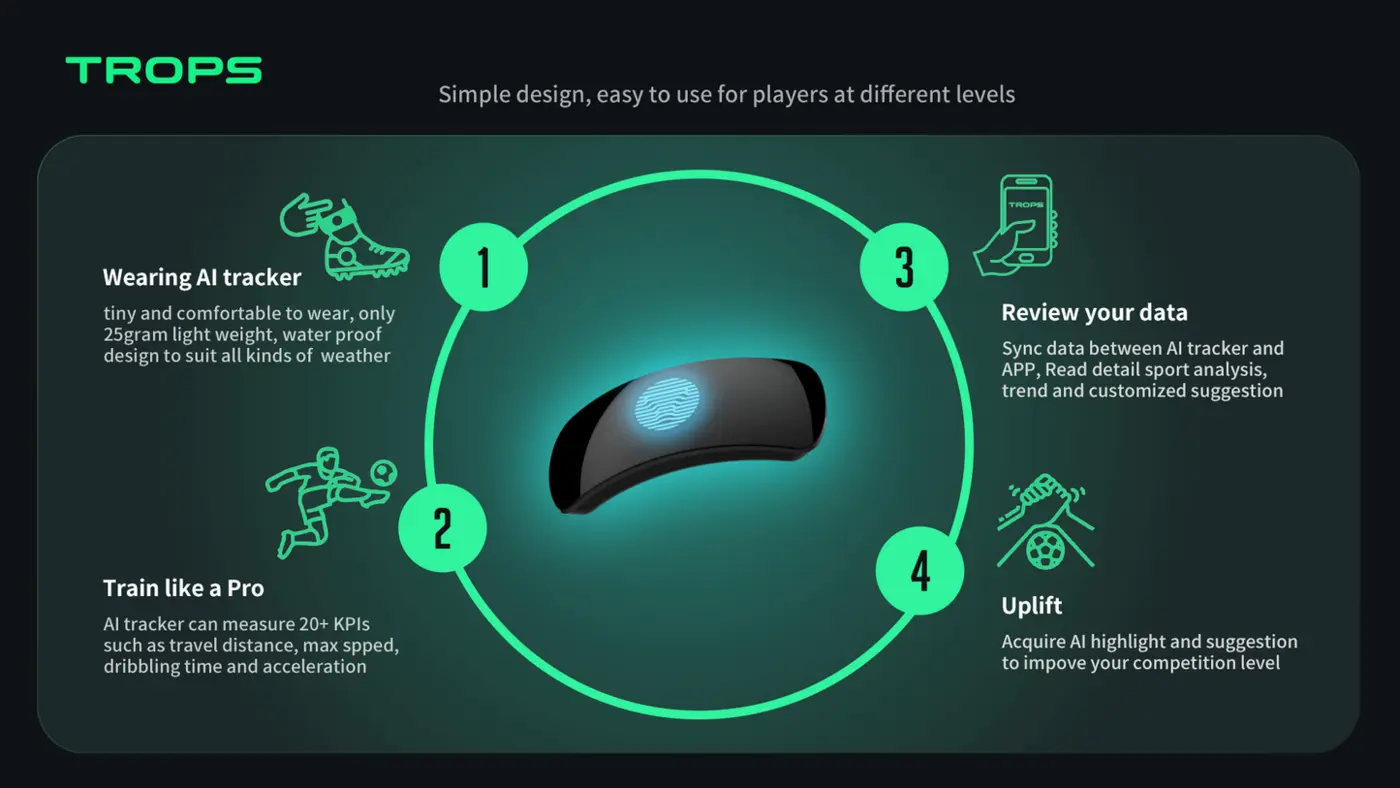
Foot-worn placement also opens up technical metrics that a vest cannot see. The TROPS-1, for example, is a 25 g foot-worn sensor with a 9-axis IMU sampling at high-rate, a rechargeable battery (capacity in the datasheet), Bluetooth 5.0 and IP66 protection. It fits into a ankle and measures touches, shots, strike quality, left/right foot balance, sprints, top speed, distance, accelerations and decelerations, and training load. That combination of physical and technical data is hard to get from a vest alone.
Optical Camera Systems
Camera systems track every player on the pitch without wearables. They are excellent for match analysis but require fixed camera installation, are expensive, and typically measure only what happens on the field — not individual training load across the week.
Optical systems shine when the question is tactical: team shape, pressing lines, spacing between units, and the movement of players who are not near the ball. They are also useful where you cannot ask players to wear anything — for example, opposition scouting or a match environment where compliance is not guaranteed.
The practical catch is scope. A fixed installation covers one pitch, and it covers match or session activity on that pitch. It does not follow a player into the gym, onto a second field, or into a small indoor hall on a wet Tuesday. If your question is "how much total load has this player accumulated this week," a camera on one pitch answers only part of it.
How the Three Systems Compare in Daily Use
Setup and logistics
GPS vests need charging, sizing and a distribution routine before every session. IMU foot pods need the same routine but are smaller and quicker to hand out. Optical systems need almost no per-player routine but require installation, calibration and a fixed venue.
Where they work
GPS: outdoor pitches with a clear sky view. IMU: indoors and outdoors, including sports halls and covered courts. Optical: the specific pitch where cameras are installed.
What they measure best
GPS: position, distance, speed bands, positional profiles. IMU: accelerations, decelerations, changes of direction, jumps, foot strikes, and ball-contact actions when worn on the foot. Optical: multi-player spatial and tactical data.
Who they suit
GPS suits elite outdoor squads with a stable daily routine. IMU suits youth setups, schools, indoor and mixed-use programmes, and any club that wants technical as well as physical data. Optical suits clubs with match analysis resource and a fixed main venue.
A Practical Selection Checklist
Before you compare products, answer these questions honestly with your staff:
- Where do you train? Count the sessions per week that happen indoors, on small pitches, or under poor coverage. If that number is high, a vest-only plan will leave gaps.
- Who wears the device? Younger players and school groups need small, light hardware and a routine that takes seconds per player.
- What decisions will you make with the data? Session design, load management, technical development, or match tactics — the answer points to different systems.
- Who will run it? Be realistic about staff time for charging, syncing, reviewing and feeding data back to coaches.
- What is the season-long plan? A pilot is easy; sustaining 30 weeks of consistent data collection is the real test.
Common Mistakes Clubs Make
Buying hardware before defining the workflow
The most common failure is a box of sensors with no routine attached. Decide who hands out devices, who charges them, who reviews the reports and when coaches see the output. Our guide to building a data-driven training programme walks through that workflow in detail.
Assuming one system covers everything
No single technology answers every question. Many clubs run a combined approach: foot-worn GPS+IMU for daily training and technical work, and camera or video for match review.
Ignoring player comfort and compliance
If players find a device uncomfortable, they quietly stop wearing it properly — and the data quietly becomes unreliable. Light foot-worn hardware tends to have fewer compliance issues with younger groups.
Chasing metrics instead of questions
A dashboard with forty numbers is not analysis. Start with two or three questions per training block, then pick the metrics that answer them. Our overview of the metrics that matter in football is a useful starting point.
Forgetting the review loop
Data that never reaches a coach is a cost, not an asset. Build a short weekly review — even fifteen minutes — into the calendar before you scale up.
Practical Scenarios
The academy with mixed training venues
An academy training twice a week outdoors and once indoors needs hardware that works in both. A foot-worn IMU-based tracker removes the venue problem and adds technical metrics that support individual development plans. See how this works in practice in our youth academy case example.
The school programme with large groups
Schools need fast distribution, durable hardware and simple reports. Foot pods in socks or shin guards fit existing kit routines better than vests, and the data can support PE assessment as well as football sessions.
The club running a first pilot
Start with one squad, one training block and two questions. Collect consistently, review weekly, then decide whether to expand. Our pilot programme guide sets out a sensible sequence.
The distributor building a portfolio
Resellers and distributors should look at whether the supplier offers both hardware and a platform, whether onboarding is included, and what the minimum order quantities are. RunSports offers samples from 10 units and OEM from 100 units — see the distributor opportunity overview for the commercial picture.
Which One Fits Your Club?
Quick rule of thumb: elite outdoor training → GPS vest; youth, indoor or mixed use → IMU foot pod; match broadcast analysis → optical. Most clubs below the top leagues find a combined GPS+IMU foot tracker the most practical, affordable choice.
If you want to run both training and reporting from one place, the RunSports Team Platform provides a cloud dashboard with per-player and per-team reports covering technical KPIs, load and trends, plus video sync. For academies scaling from a small squad to more than a hundred players, the Academy Bundle packages sensors, platform access and onboarding together.
Whatever you choose, judge it on one test: does it change what a coach does on Monday morning? If the answer is yes, the system is earning its place.
Next Step
Ask us for a comparison demo and see the data yourself — we will walk through the hardware, the reports and the onboarding routine so you can judge the fit against your own sessions.
Recommended for your program
Frequently asked questions
What is the main difference between GPS, IMU and optical tracking?
GPS units worn in vests track position, distance and speed outdoors. IMU sensors measure movement directly, such as accelerations and changes of direction, indoors and outdoors. Optical camera systems track every player without wearables but require fixed installation and cover only the pitch where cameras are installed.
Can IMU foot pods be used indoors?
Yes. IMU sensors work indoors and outdoors, including sports halls and covered courts, because they measure motion directly rather than relying on satellite signals. They are also lighter than vests and capture explosive actions like sprints, accelerations and changes of direction that GPS can miss.
Why would a club choose optical cameras over wearables?
Optical systems are strong for tactical questions such as team shape, pressing lines and spacing, and for situations where you cannot ask players to wear anything, like opposition scouting. The catch is scope: a fixed installation covers one pitch and does not track a player's total load across the week.
What should clubs decide before buying tracking hardware?
Define the workflow first. Decide who hands out and charges devices, who reviews reports and when coaches see the output. Also answer where you train, who wears the device, what decisions the data will inform, who will run it, and whether you can sustain collection across a full season.
Need help choosing the right equipment?
Talk to Our Export TeamRelated Reading
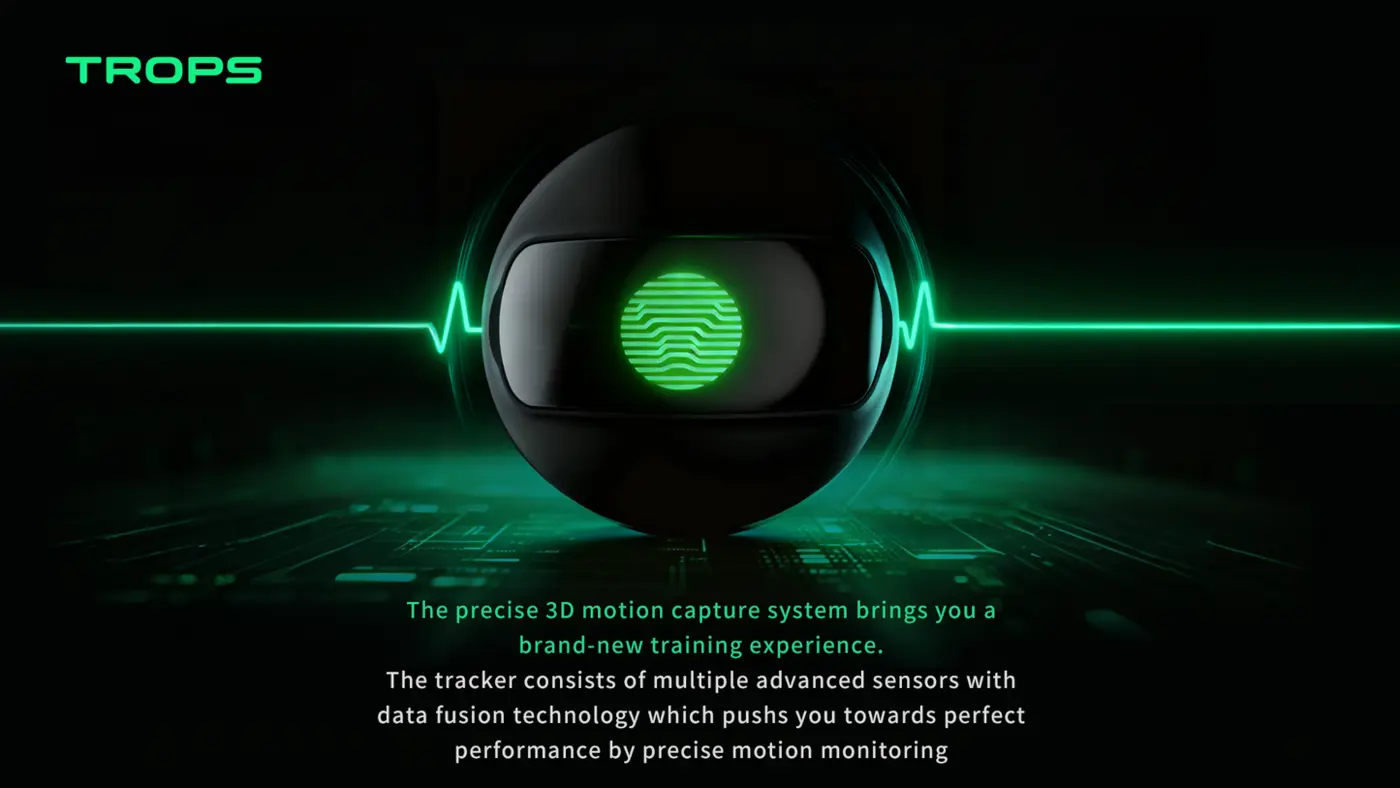
What Is a Soccer Foot Tracker and How Does It Improve Youth Training?
A practical guide to soccer foot trackers: how IMU sensors measure shots, sprints and foot balance, and how academies use the data in daily training.
Read →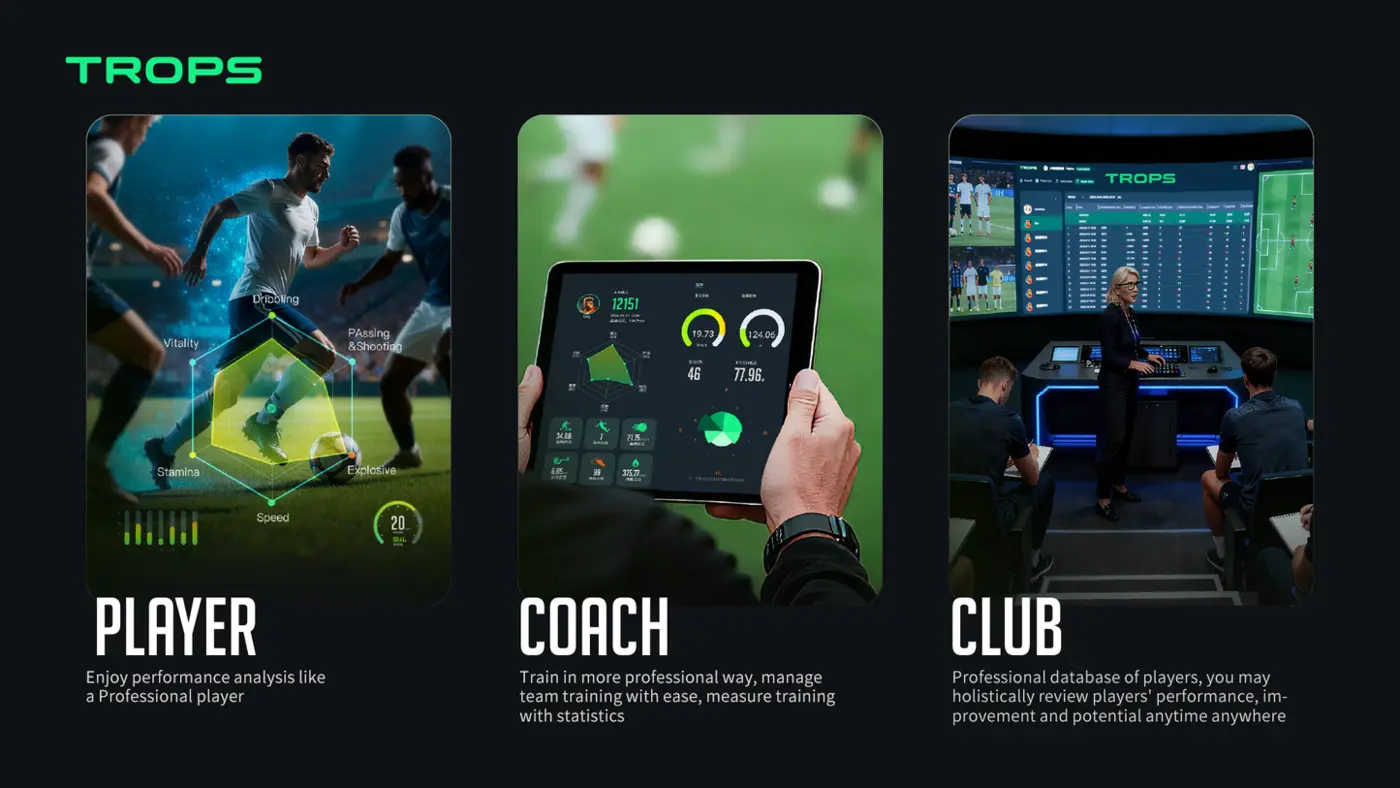
How Wearable Sensors Help Football Academies Develop Players Faster
How football academies use wearable sensors to give objective technical feedback, manage load and fatigue, communicate with parents, and scale player development across squads.
Read →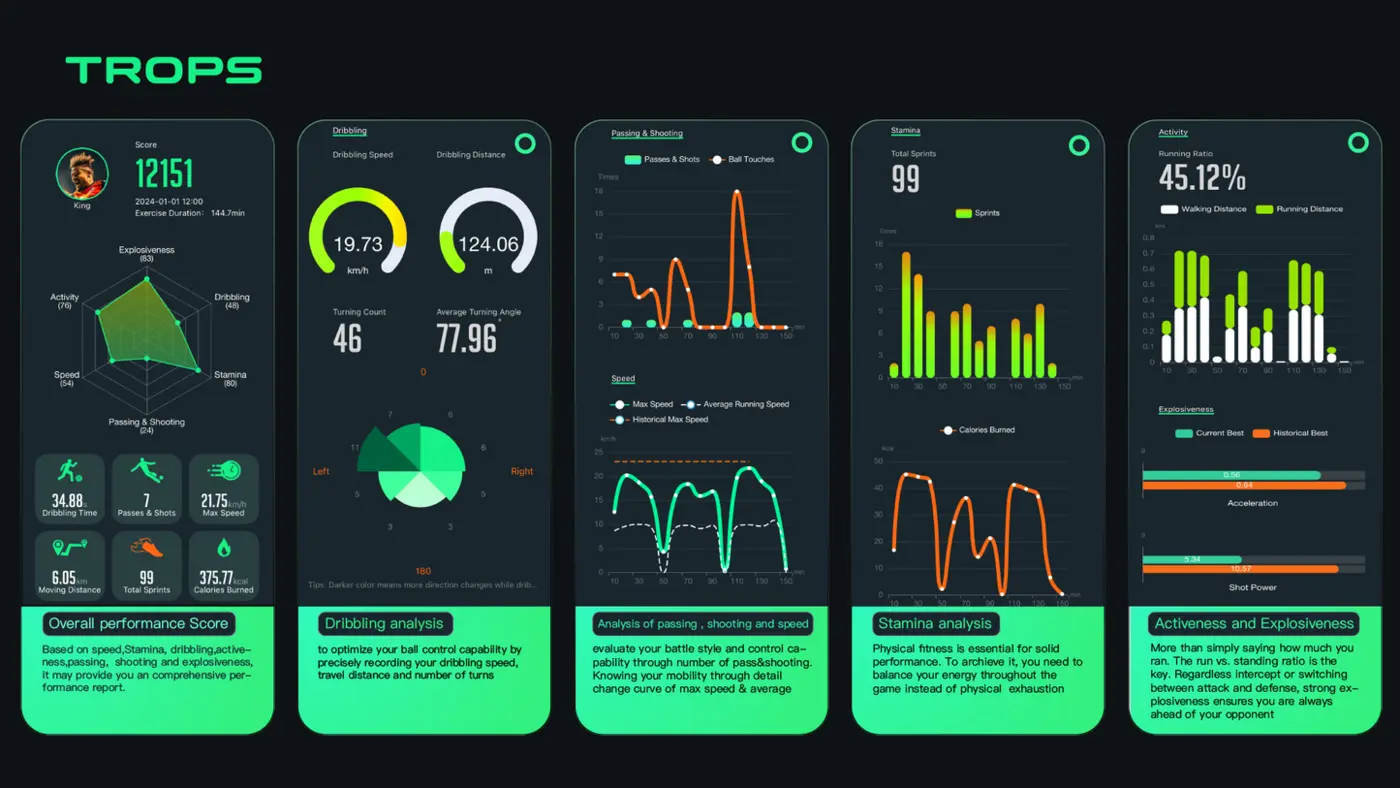
Buying Guide: What to Look for in Football Data Tracking Equipment
A practical buying guide for academies, schools, clubs and distributors comparing football data tracking wearables — accuracy, battery, durability, software, MOQ and support.
Read →