Smart Football Wearable Devices
Sensors, GPS and AI in one small device — what they measure, how they compare, and how to choose.
What a smart football wearable actually is
A smart football wearable is a small device worn during training or matches that records movement and ball-contact data, then sends it to software that turns it into coaching information. The category covers three different technologies: foot-worn IMU sensors, GPS vests, and optical camera systems.
Foot-worn sensors capture what happens at the point of contact with the ball — touches, shots, strike quality, left/right balance — plus running metrics like sprints and distance. GPS vests specialise in team-wide positional and distance data. Optical systems need cameras and a fixed venue.
For youth academies, schools and clubs without a camera rig, a foot-worn IMU device usually delivers the best ratio of technical insight to cost and setup effort.
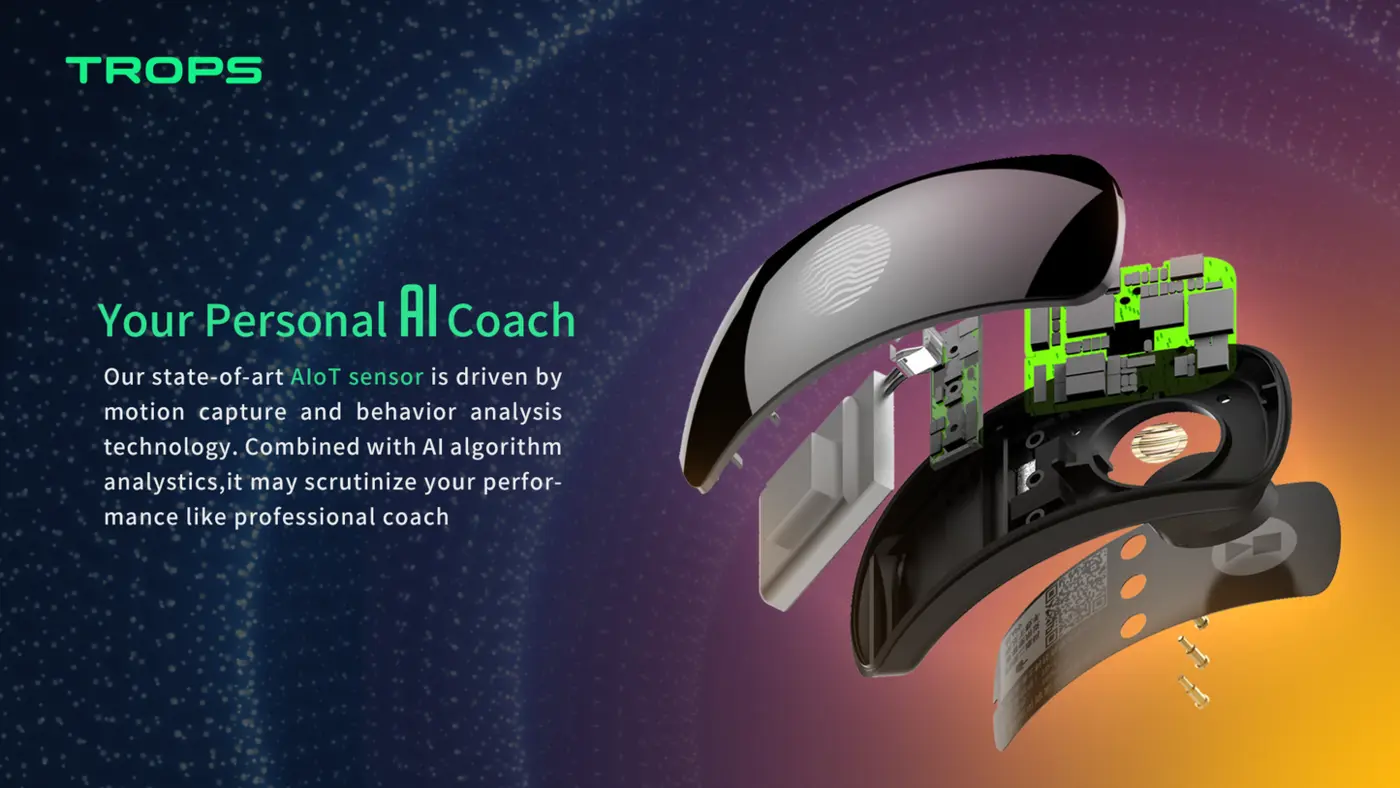
What the TROPS-1 measures
high-rate 3D motion
A 9-axis IMU samples movement 1000 times per second — enough to distinguish a clean strike from a scuffed shot.
Touches & shot quality
Every ball contact is detected with strike quality and foot identification, so weak-foot work becomes measurable.
Sprints & load
Top speed, sprint count, distance and acceleration/deceleration — the core workload metrics for any age group.
Built for real pitches
25 g, IP66 waterproof, recharging, a full training day of training per charge.
Hardware plus the platform that makes it useful
Sensors alone produce numbers. The RunSports team platform turns them into per-player and per-team reports: technical KPIs, training load, progress trends and video sync.
Bluetooth 5.0 syncing means no docking stations and no cables on the pitch. One coach can manage a squad of 20+ players from a tablet, and every player keeps a season-long profile.
Full OEM/ODM is available — custom colour, logo, packaging, app branding and firmware tuning — for distributors and brands launching their own line.
Which technology fits your club?
If you need technical data on ball contact, choose foot-worn IMU. If you need team-wide positioning and distance, GPS vests are the better fit. If you train in a fixed stadium and need tactical positioning, optical systems are the professional route.
Read the detailed comparisons: GPS vs IMU vs optical, GPS vest vs camera analysis, and 10 key features to check before buying. For durability and battery expectations, see the tracker durability guide.
Request a sample or spec sheet
Sample orders from 10 units. OEM orders from 100 units.
Contact SalesFrequently asked questions
What is the minimum order for a sample or an OEM order?
Sample orders start from 10 units, so an academy or school can trial the tracker with a small group before committing. OEM orders start from 100 units. Full OEM/ODM is available for distributors and brands launching their own line, including custom colour, logo, packaging, app branding and firmware tuning.
How does one coach manage a whole squad with this system?
The RunSports team platform turns sensor data into per-player and per-team reports covering technical KPIs, training load and progress trends. Bluetooth 5.0 syncing means no docking stations or cables on the pitch, and one coach can manage a squad of 20+ players from a tablet, with every player keeping a season-long profile.
Is a foot-worn sensor or a GPS vest the better fit for our programme?
It depends on the data you need. Foot-worn IMU suits technical insight on ball contact — touches, shots, strike quality, left/right balance — plus running metrics. GPS vests specialise in team-wide positional and distance data. Optical systems need cameras and a fixed venue. For academies and schools without a camera rig, foot-worn IMU usually offers the best ratio of technical insight to cost and setup effort.
Will the tracker hold up to regular training on real pitches?
Yes. The TROPS-1 weighs 25 g, is IP66 waterproof, uses recharging and provides a full training day of training per charge. Its 9-axis IMU samples movement at high-rate, enough to distinguish a clean strike from a scuffed shot, and every ball contact is detected with strike quality and foot identification.
Talk to us about your programme
Tell us your age groups, player numbers and goals — we will send a configuration and quotation within 24 working hours.